
How We Built 12 Roofing Websites That Generated 1,063% Average Click Growth
We built 12 roofing websites in 12 markets on one framework: dedicated location pages, AI search visibility, topical silos, and technical SEO. Organic clicks grew an average of 1,063% and impressions 498%, with no link building campaigns. Sites began ranking in 60-90 days, accelerated around month 6, and grew fastest after month 7.
Quick Answers
AI-ready summary- Study
- 12 roofing websites in 12 markets, live for 2 to 18 months
- Headline result
- 1,063% average click growth, 498% average impression growth, 59.37% average position improvement
- Combined traffic
- 7,251 monthly clicks and 3.04 million monthly impressions across all 12 sites
- How fast
- First rankings in 60-90 days, acceleration near month 6, compounding after month 7
- What drove it
- Location pages for every service area, topical silos, technical SEO, and AI-ready structure. No link building campaigns.
- Build scope
- 10-50 pages, 30-60 days from purchase to launch, $2,000-$10,000 investment
- Data sources
- Google Search Console, Google Analytics, and Search Atlas, captured in late 2025
- Best for
- Roofing contractors, and agencies that serve them
- Built by
- Chaz Edward Local Marketing, York, PA
- Contact
- (717) 722-5220 or team@chazedward.com
Why Most Roofing Websites Fail
Most roofing websites look professional, show beautiful project photos, and list services, yet the phone stays silent.
Looking good is not enough. A roofing website has to rank in local search, capture leads automatically, and show up in every neighborhood you serve, not just where your office is located.
This case study analyzes 12 roofing websites we built over the past 18 months, across 12 markets, from small towns to major metropolitan areas. These were not template swaps with a new logo. Each was custom built for local search, structured to rank, convert, and scale.
Below is what worked in roofing SEO: data from real websites in real markets, including an average of 1,063% click growth, 498% impression growth, and position improvements across every site.
The typical roofing website problems
Generic "Service Areas" pages
A single page that lists 30 cities in one paragraph ("We serve Dallas, Fort Worth, Arlington, Plano..."). Google does not rank it, homeowners cannot find it, and it stays invisible.
Template designs that all look identical
When your website looks exactly like 50 other roofers using the same theme, you do not build brand authority. You blend into the background.
No multi-location strategy
If you serve 5 locations but have only 1 Google Business Profile, you leave a large amount of traffic on the table. Creating a separate profile for every neighborhood is not realistic, and it does not meet Google's Business Profile guidelines. A multi-location SEO structure on the website closes that gap.
Zero conversion tools
A contact form buried at the bottom of the homepage is not a lead capture strategy. Where is the storm damage checker, the instant estimate calculator, the emergency service banner?
Outdated or non-existent local SEO
Most roofing websites were built 5-10 years ago, long before AI Overviews, semantic search, and multi-location architecture became critical ranking factors.
Slow, bloated, mobile-unfriendly sites
If your website takes 6 seconds to load on mobile, the lead has already gone to a competitor whose site loads in 2 seconds.
of clicks go to the first organic result on Google, per a study of 4 million search results (Backlinko click-through rate study).
of all pages never get organic traffic from Google, mostly from poor search visibility and no strategy (Ahrefs).
cost per click for "roof replacement" keywords, which makes ranking organically essential for survival.
These were the challenges our clients faced. Different markets, competition levels, and starting points, but the same fundamental problem: their websites were not built to win in local search.
The Roofing Website Framework
To solve these challenges, we built a framework specifically for roofing contractors. It is a methodology that adapts to any market while keeping the core elements that drive results, and it became the Roofing Leads Website™.
Multi-Location SEO Architecture
Dedicated pages for every profitable service area
The base of every successful roofing website is its multi-location structure. We do not create a generic "areas we serve" page. We build dedicated location pages for every profitable service area, even where our clients have no physical office.
Location and service area pages
- Unique, locally relevant content (not templated text)
- Neighborhood-specific project photos and testimonials
- Service area maps with radius visualization
- Schema markup connecting the business to geographic entities
- Internal linking to relevant service pages
- Local semantic signals (landmarks, neighborhoods, local terminology)
Google needs clear signals about where you serve customers. A paragraph of city names does not provide them. Dedicated pages with unique content, local schema, and geographic relevance tell Google: "We do not just drive through this area. We serve it."
AI Search Visibility
Your website has to speak the language AI systems read
Google's search landscape has changed. AI Overviews, ChatGPT integration, and semantic search mean keyword stuffing no longer works. Your content has to be structured so AI systems can read it, cite it, and recommend it.
Local AI visibility
- LLMs.txt files that tell AI systems you are the authority in your niche
- TLDR summaries structured for AI parsing and quick answers
- Semantic markup connecting your business to local entities and concepts
- Structured data that makes your content easy for AI to read
- Geolocation data embedded in every service area page
When a homeowner asks ChatGPT or Google AI for the "best roofer near me" in their neighborhood, you want to be the answer. Our AI SEO services and schema for AI search work structure and mark up your content so AI systems can read it and recommend you.
Topical Authority and Content Silos
Complete topic coverage, organized into logical silos
Random blog posts such as "5 signs you need a new roof" will not make you the roofing authority in your market. You need full topical coverage organized into content silos.
Roofing topical mapping
- Service type silos (residential, commercial, storm damage, repairs)
- Material type silos (asphalt, metal, tile, TPO, flat roofing)
- Location silos (service areas, neighborhoods, cities)
- Supporting content (financing, warranties, insurance claims, maintenance)
Each content cluster is internally linked, building a semantic web that tells search engines: "This website covers roofing in this market completely." Google rewards comprehensive, well-organized content. When a site covers every relevant roofing topic and organizes it logically, it builds topical authority that shows up in rankings.
Technical SEO Foundation
Technical SEO comes first
Good design does not matter if Google cannot crawl the site or it loads too slowly. Every website we build is engineered for technical soundness from day one, from page architecture to crawl budget to advanced indexing, so the site starts ranking quickly.
Comprehensive technical SEO
- Core Web Vitals tuning (LCP, INP, CLS)
- Mobile-first responsive design
- Image compression and lazy loading
- Server response time tuning
- Clean URL structure and breadcrumb navigation
- XML sitemap and robots.txt configuration
- Schema markup for all services and locations, following Google's local business structured data guidance
- Google Search Console and Analytics setup
If a site is slow, not mobile-friendly, or has crawl errors, no amount of great content will rescue it.
The Roofing SEO Topical Map
The complete content strategy behind local SEO authority. Four pillar pages, twelve clusters, and forty-eight supporting articles. Open any cluster to see its supporting content.
Roof Replacement
Pillar pageRoofing Materials
- Asphalt Shingle Types & Costs
- Metal Roofing Pros & Cons
- Tile vs Shingle Comparison
- Best Roofing Materials for City
Replacement Costs
- Roof Replacement Cost Calculator
- Cost Per Square Foot Guide
- Financing Options for New Roof
- Insurance Coverage for Replacement
Replacement Process
- How Long Does Replacement Take?
- What to Expect During Installation
- Preparing Your Home for New Roof
- Signs You Need Roof Replacement
Roof Repair
Pillar pageTypes of Damage
- Fixing Roof Leaks
- Storm Damage Repair
- Missing Shingle Replacement
- Wind Damage Assessment
Emergency Repairs
- 24/7 Emergency Roof Repair
- Temporary Roof Tarping
- Water Damage Prevention
- After-Storm Inspection Services
Preventive Maintenance
- Annual Roof Inspection Checklist
- Gutter Cleaning & Maintenance
- Roof Ventilation Problems
- Extending Roof Lifespan Tips
Commercial Roofing
Pillar pageFlat Roofing Systems
- TPO vs EPDM Roofing
- Modified Bitumen Systems
- Flat Roof Drainage Solutions
- Commercial Roof Coating
Commercial Services
- Minimal Business Disruption
- Commercial Roof Warranties
- Building Code Compliance
- Multi-Property Management
Maintenance Programs
- Commercial Roof Inspection
- Preventive Maintenance Plans
- Asset Management Services
- Roof Life-Cycle Analysis
City Roofing Services
Pillar pageLocal Climate Factors
- Best Roofs for City Weather
- Hurricane/Snow Load Requirements
- Local Building Codes
- Seasonal Roofing in City
Service Areas
- Roofing in Neighborhood 1
- Roofing in Neighborhood 2
- Roofing in Neighborhood 3
- County Roofing Services
Local Expertise
- Licensed & Insured in State
- Local Customer Reviews
- Community Projects & Portfolio
- Why Choose a Local Roofer
12 Websites, 12 Markets
Markets ranged from small towns to major metros. Bars show page count (scaled to 50 pages) and months live (scaled to 18 months). The four sites with their own results below are linked.
| Market | Competition | Launch date | Pages | Months live |
|---|---|---|---|---|
| Delaware | Mid | July 2025 | ||
| Temple, TX | Mid | Aug 2025 | ||
| Kerrville, TX | Mid | May 2025 | ||
| Leesburg, VA | Mid | July 2025 | ||
| San Antonio, TX | High | May 2025 | ||
| Sugar Land, TX | Mid | July 2025 | ||
| Pasadena, TX | High | Aug 2025 | ||
| Fayetteville, AR | Mid | Aug 2025 | ||
| Alabaster, AL | Mid | June 2025 | ||
| New Jersey | Mid | Feb 2025 | ||
| Maryland | Mid | Sept 2025 | ||
| Schenectady, NY | Mid | May 2024 |
Key portfolio stats
- 12 websites across 12 different markets
- Markets ranging from small towns to major metros
- A mix of residential, commercial, and mixed-service roofers
- Site sizes from 10 to 50 pages
- Ages from 2 months to 18 months
Data Across 12 Markets
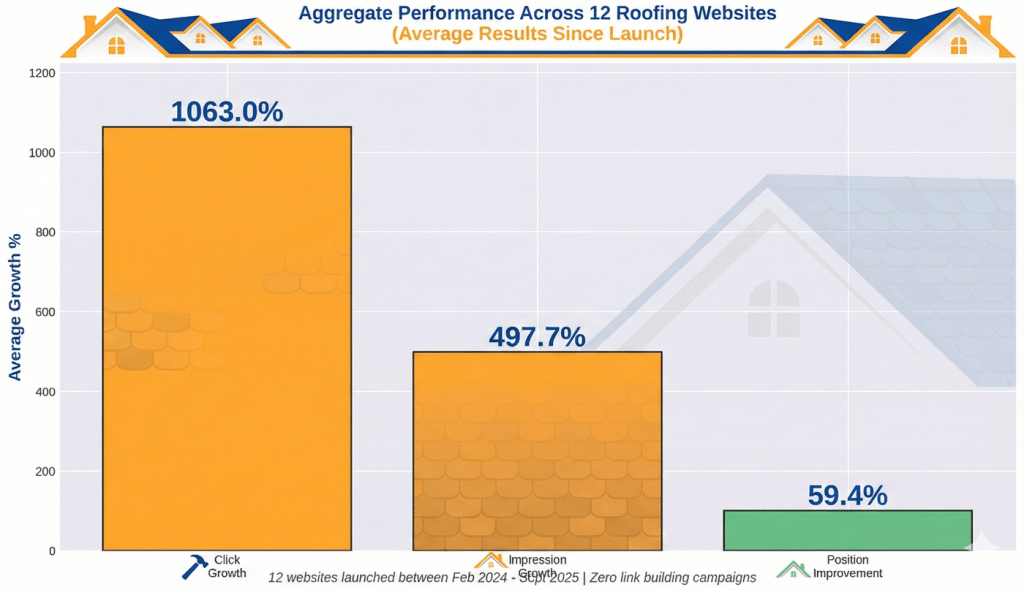
Aggregate performance metrics, measured against each site's pre-launch or early baseline. The numbers speak for themselves.
Average click growth
Across all 12 websites, organic clicks increased by an average of 1,063% compared to their pre-launch or early performance baselines.
Average impression growth
Search impressions, meaning how often the websites appeared in Google search results, grew by an average of 498%.
Average position improvement
Average search position improved by 59.37%, moving sites from page 4-5 into top 10-30 positions, with many keywords reaching page 1.
What these numbers mean for a roofing business
A roofing company getting 100 organic clicks per month from Google might generate 10-20 inspection requests, which could close into 3-5 jobs.
Illustrative scenario, not a guarantee. Results vary by market, close rate, and project value.
When you increase your roofing website clicks by 1,063%, you are not improving a vanity metric. You are changing the revenue the business can reach.
Individual Performance: Four Markets, Four Starting Points
One site with cannibalization problems, one penalized domain, one outdated website in a high-competition market, and one tiny site with almost no visibility. Each case below covers the situation, what we built, and why it worked.
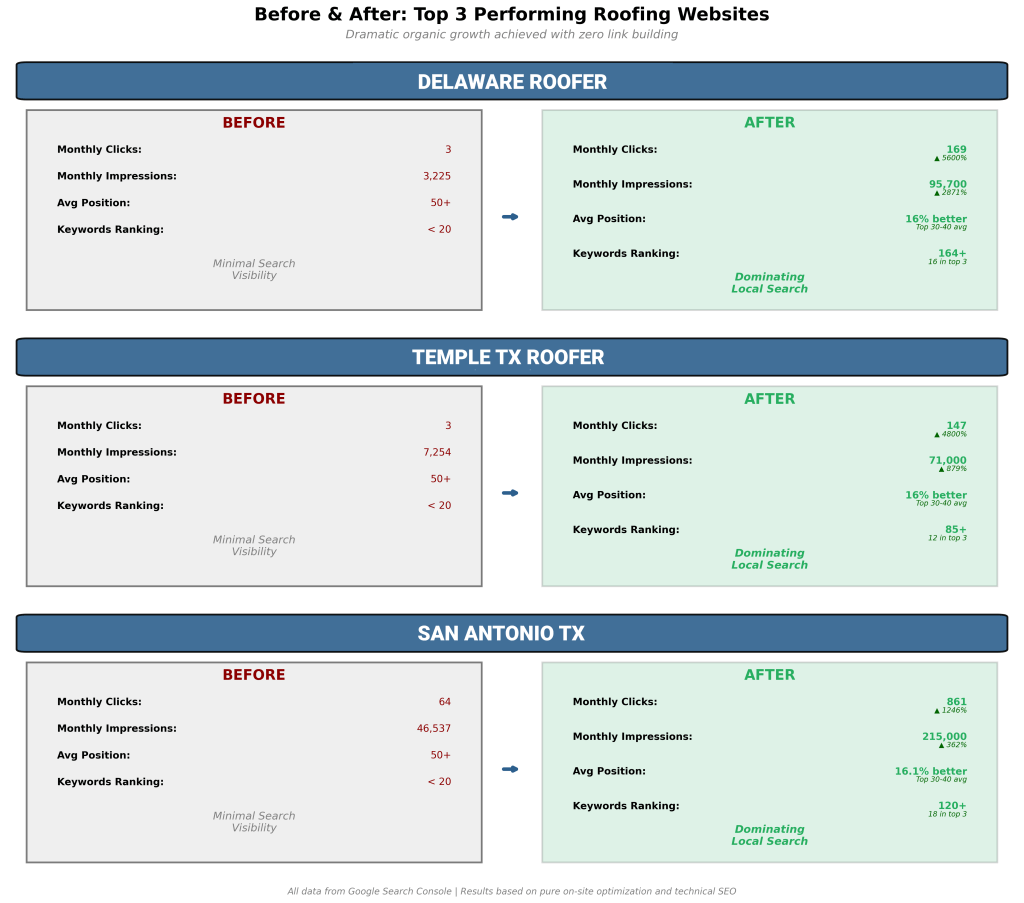
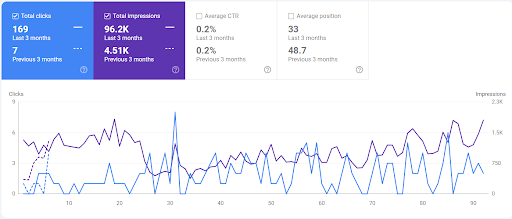
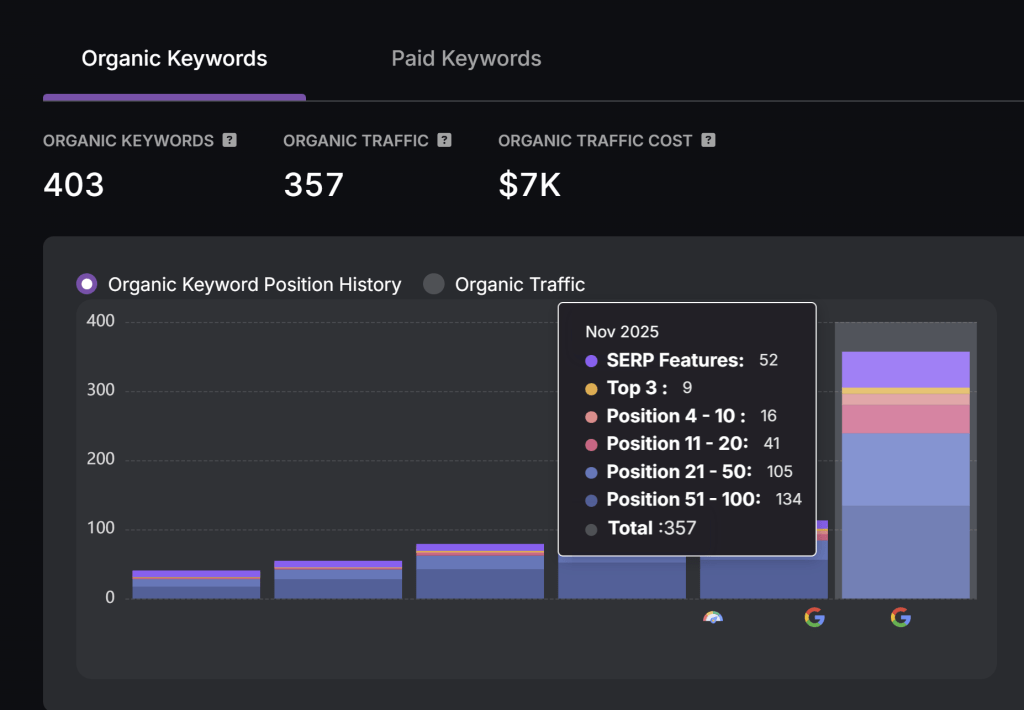
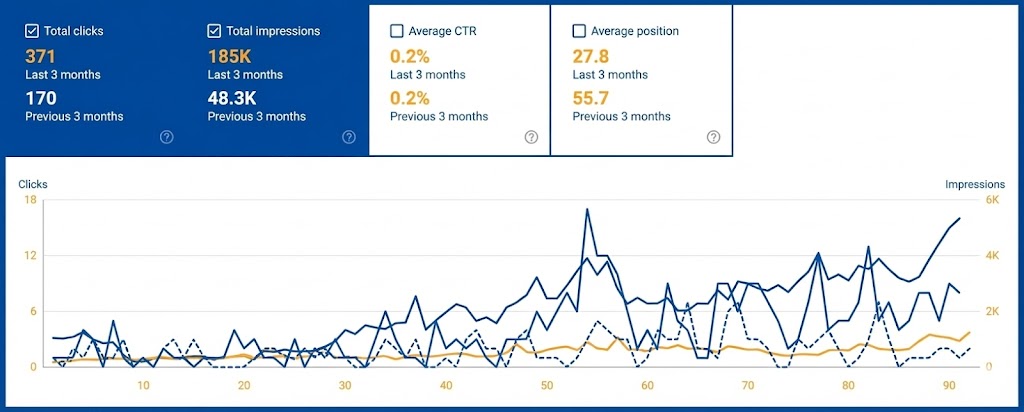
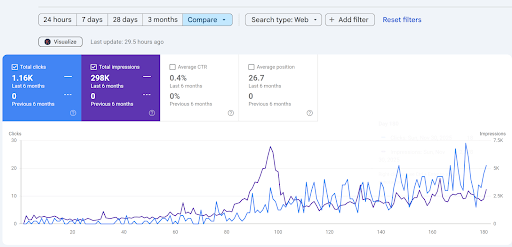
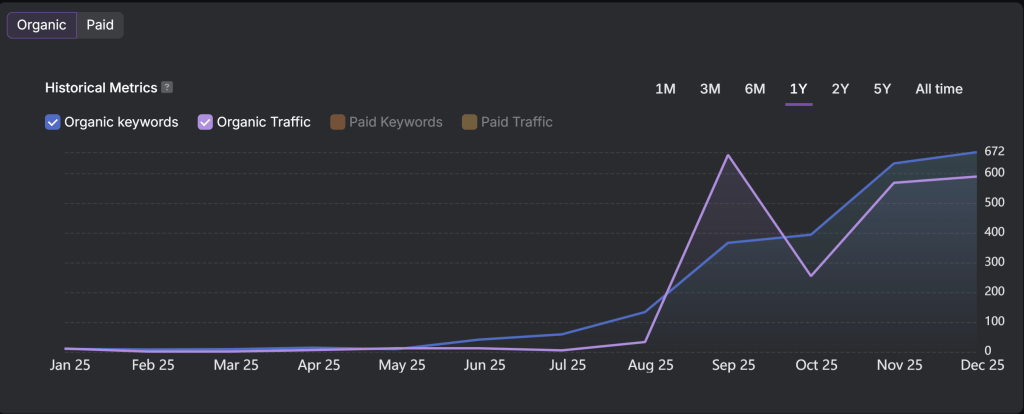
How to read the figures. The percentages follow the "before" column in the graphic on this page. The "from" and "to" ranges beneath them come from Google Search Console, comparing the last 3 months with the previous 3 months. Both are shown so you can check the work.
Roofer in Delaware
The situation
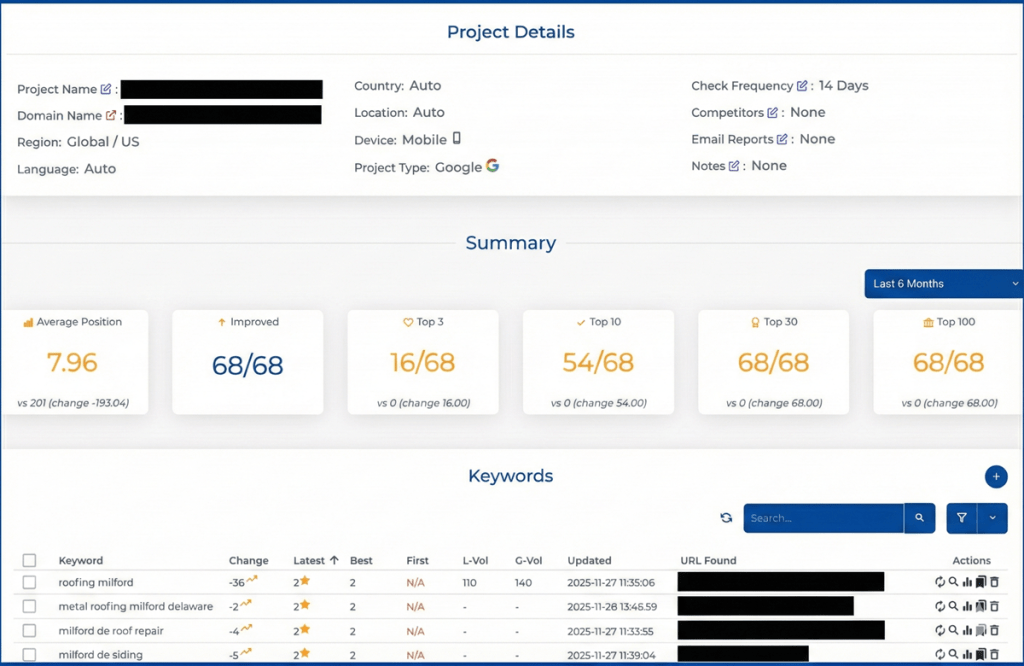
This roofer came to us with an existing website suffering from cannibalization issues. Multiple pages competed for the same keywords, there was no clear site structure, and local work reached little beyond their immediate area.
What we built
A 50-page roofing site with comprehensive service area coverage, a topical authority architecture, and hyper-local pages for neighborhoods throughout Delaware.
Why it worked
The 50-page architecture covered both services and locations in depth. Instead of one page trying to rank for "Delaware roofer," we created dedicated pages for "Milford DE roofing," "Sussex County roof replacement," "Lewes roof repair," and dozens of other targeted local searches.
The semantic content structure established the site as the authority on roofing in coastal Delaware, earning rankings for everything from storm damage to commercial flat roofing.
Key lesson: More pages means more ranking opportunities, if those pages are built correctly and targeted strategically. Generic content does not scale. Hyper-local, well-structured content does.

Roofer in Temple, TX
Penalized domain
The original domain had been penalized and would not index at all.
New domain, 20-page foundation
A fresh start with aggressive technical work to speed up indexing.
Ranking within 60 days of indexing
Primary keywords ranked first, and by month 4 the site led local search.
The situation
This local roofer came to us with a worst-case scenario: their original domain had been penalized and would not index at all. We had to start completely fresh with a new domain, the equivalent of launching a brand-new business from an SEO perspective.
What we built
A 20-page, foundation-focused site with aggressive technical work to speed up indexing and establish authority quickly on a brand-new domain.
Why it worked
A clean technical foundation plus hyper-local content let Google understand and trust the new domain quickly. Within 60 days of indexing, the site ranked for its primary keywords. By month 4, it led local search.
This case proves you do not need domain age or an extensive backlink profile to rank. You need structural excellence and local relevance.
Key lesson: New domains can rank quickly if built correctly from day one. Architecture matters more than domain age.
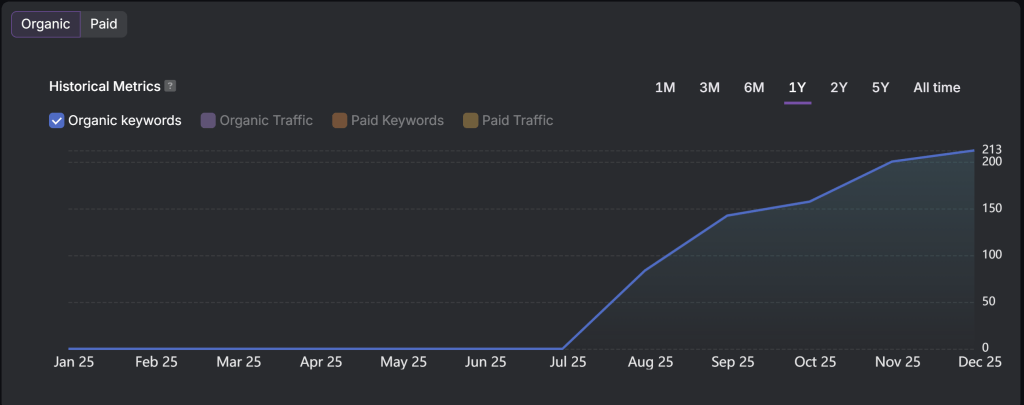

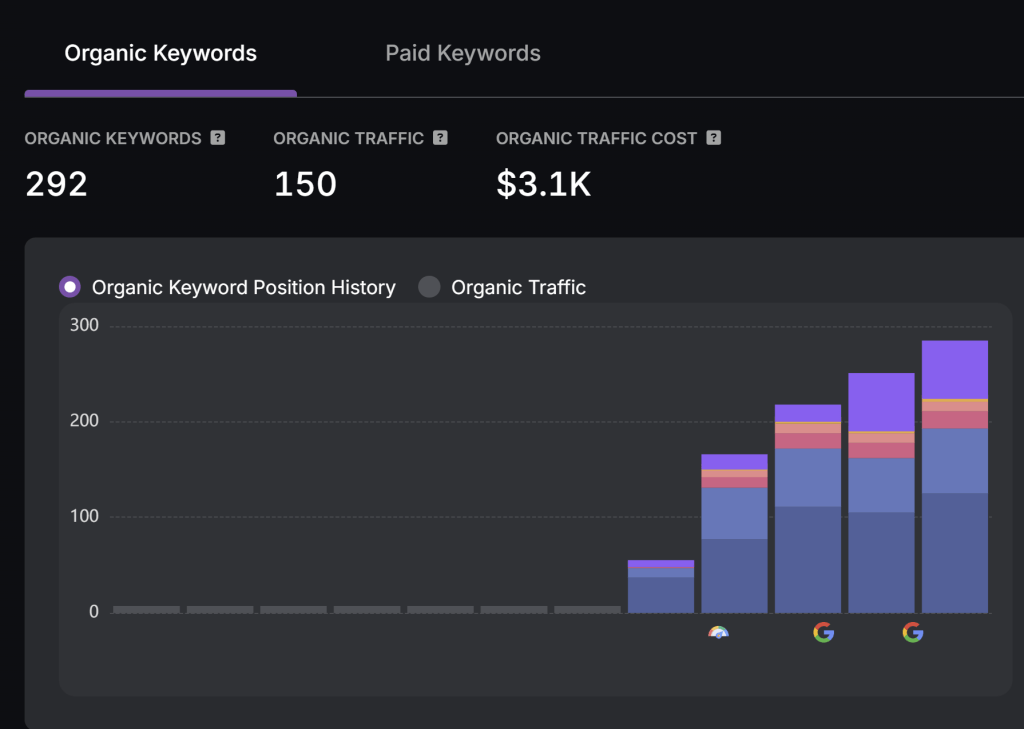
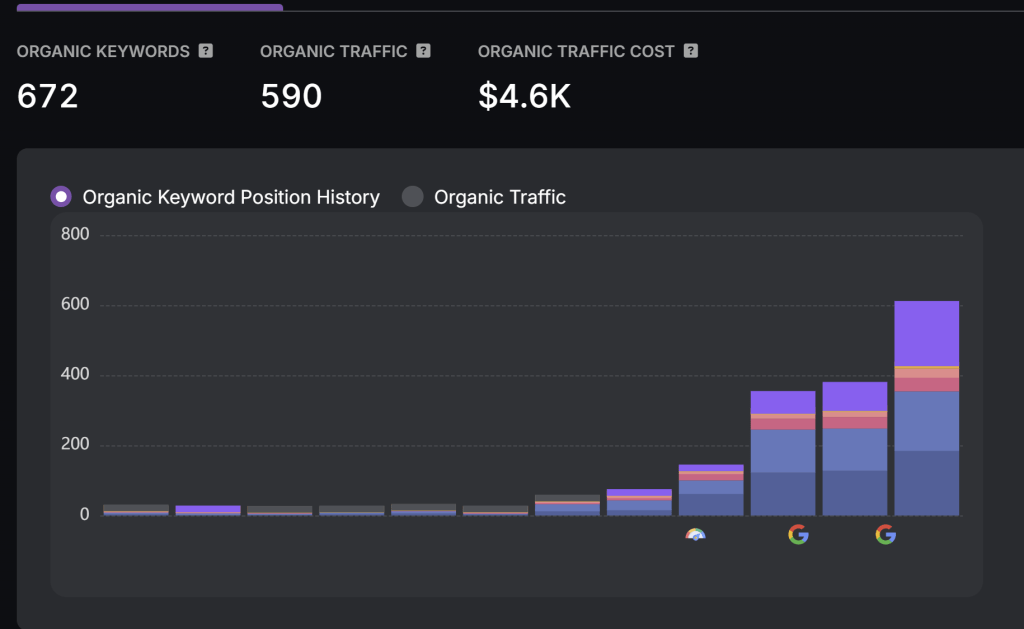
AI search visibility
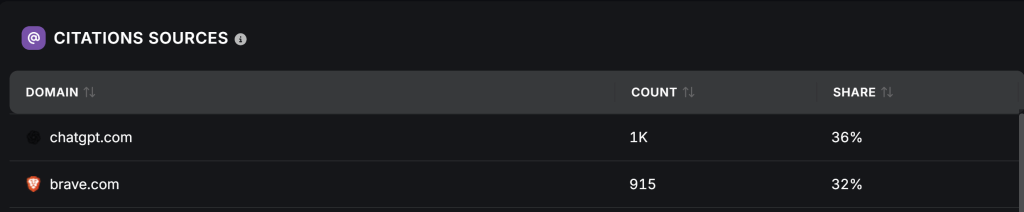
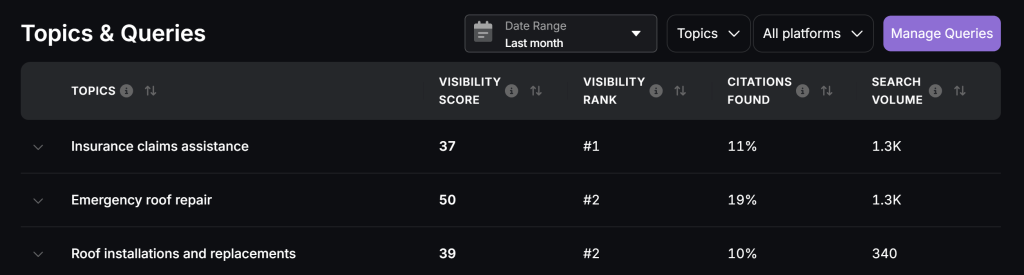
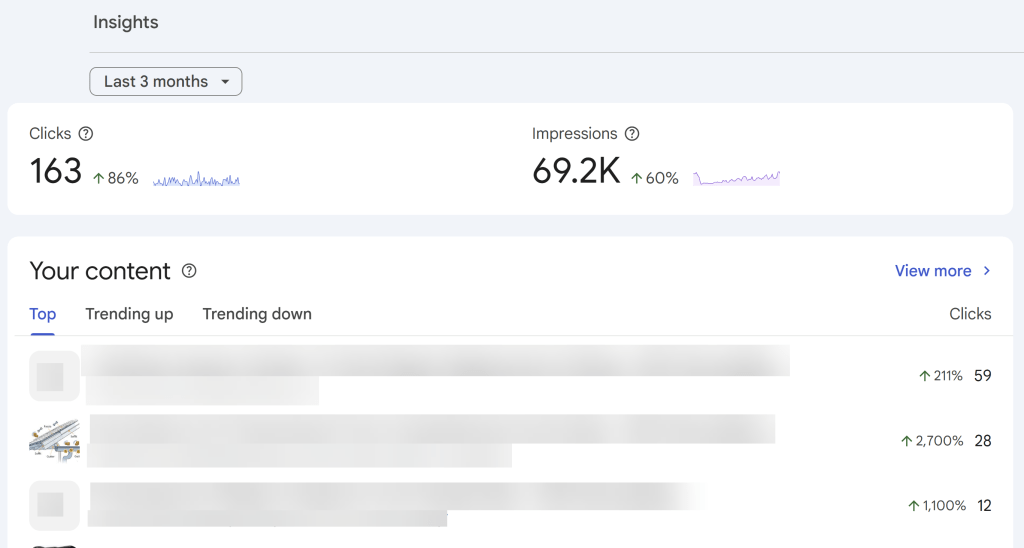
The Temple, TX site was cited by ChatGPT 1,000 times, as the AI visibility reports below show. See how we approach AI search in our AI SEO services.
Want this structure for your roofing company?
The Roofing Leads Website packages the architecture, local pages, and technical setup from these builds.
Roofer in Pasadena, TX
The situation
This Pasadena-based roofer competed with a website that looked, and performed, like it was built in 2010. They had one Google Business Profile location and needed a strategy to expand into nearby areas.
What we built
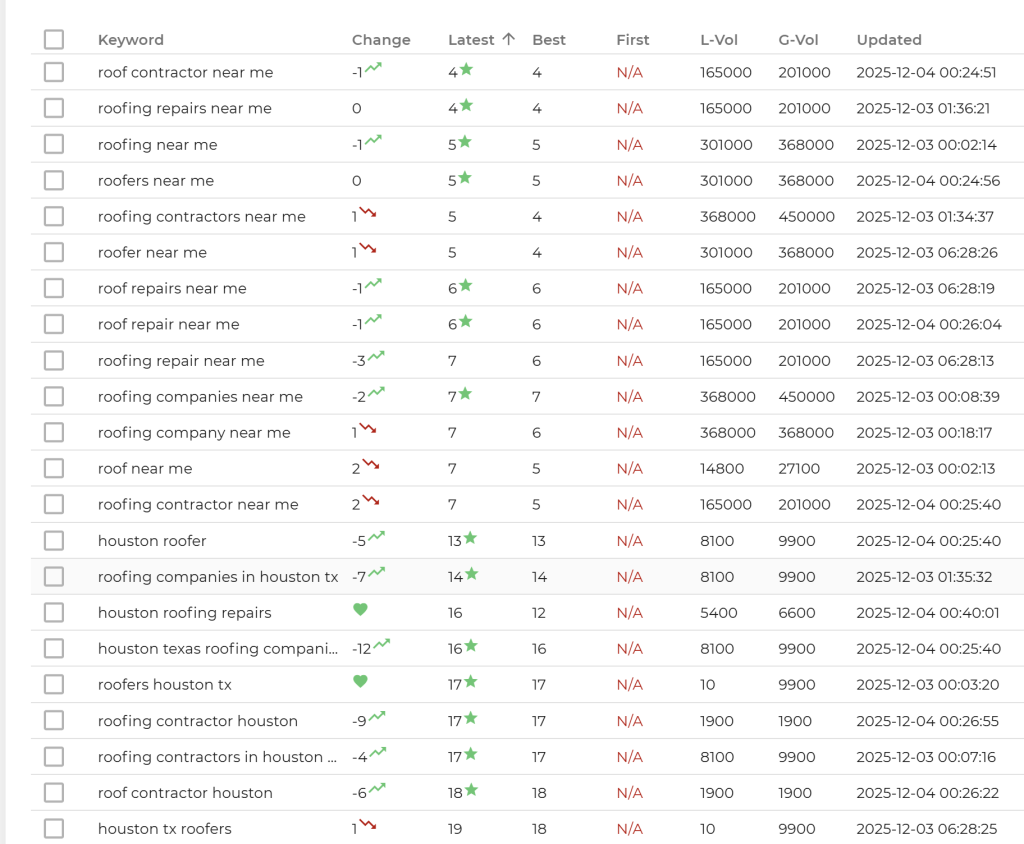
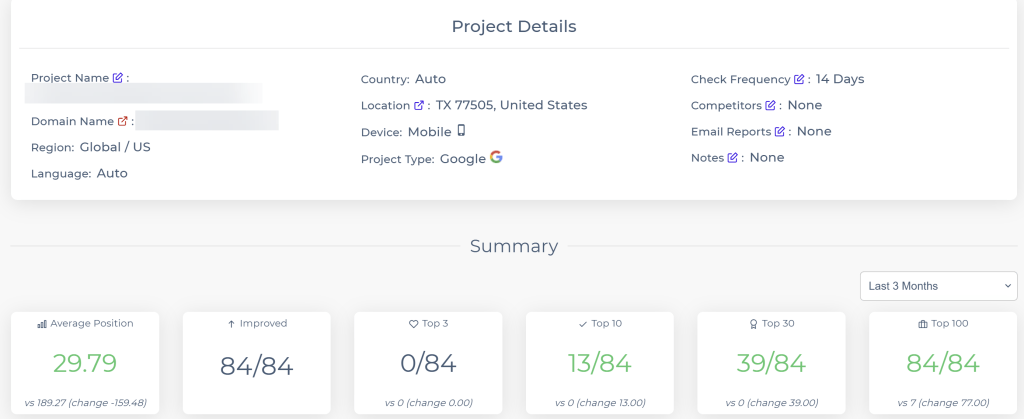
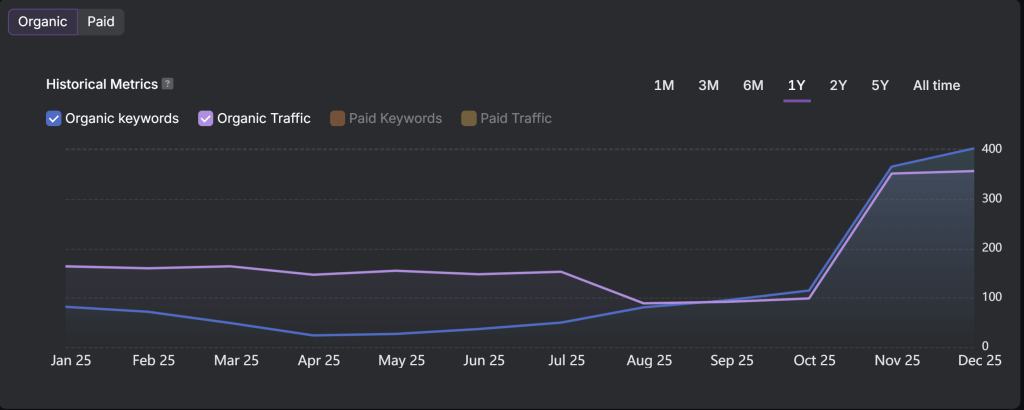
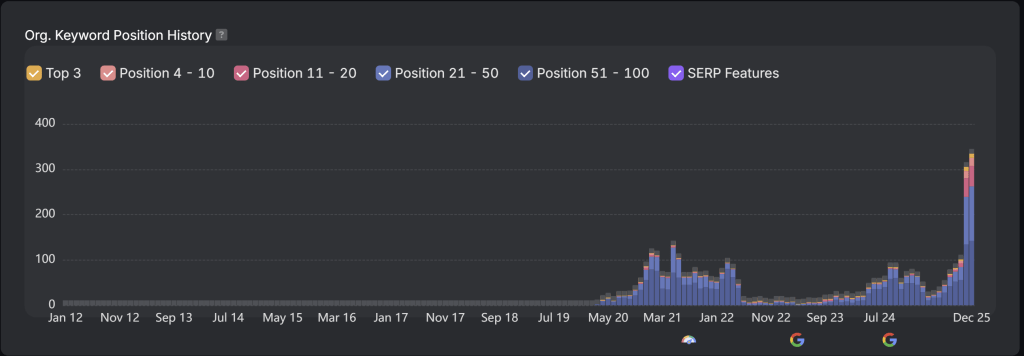
A 50-page multi-location roofer website with service area silos that help it rank in the most profitable neighborhoods and position the company to enter the Houston, TX market.
Why it worked
Hyper-local service area pages send Google relevance signals that say, "this roofer is the most relevant for this location."
Combined with a complete roofing services silo, the website becomes the most relevant result for all your roofing services across multiple cities, towns, and "near me" searches.
Key lesson: "Roofer near me" service area silos are effective for expanding into new locations, including competitive ones like Pasadena and Houston.
Roofer in San Antonio, TX
The situation
This roofer had a tiny existing website with almost no visibility. They needed to widen their service area reach but could not afford to open physical locations in neighboring cities.
What we built
A 40-page site targeting high-value neighborhoods and surrounding communities. We built roofer-near-me service area silos to triple this single-location roofer's visibility.
Why it worked
Service area expansion pages let the company rank in neighboring cities without Google Business Profile locations. The hyper-local website elements established relevance and rankings across a large metro area of Texas.
Key lesson: You do not need a physical office to rank in a location. You need location pages with genuine local relevance.
Performance Patterns: What the Data Reveals
When you analyze 12 websites across 12 markets, patterns emerge. These are not theories. They are consistent, repeatable outcomes we observed across every market.
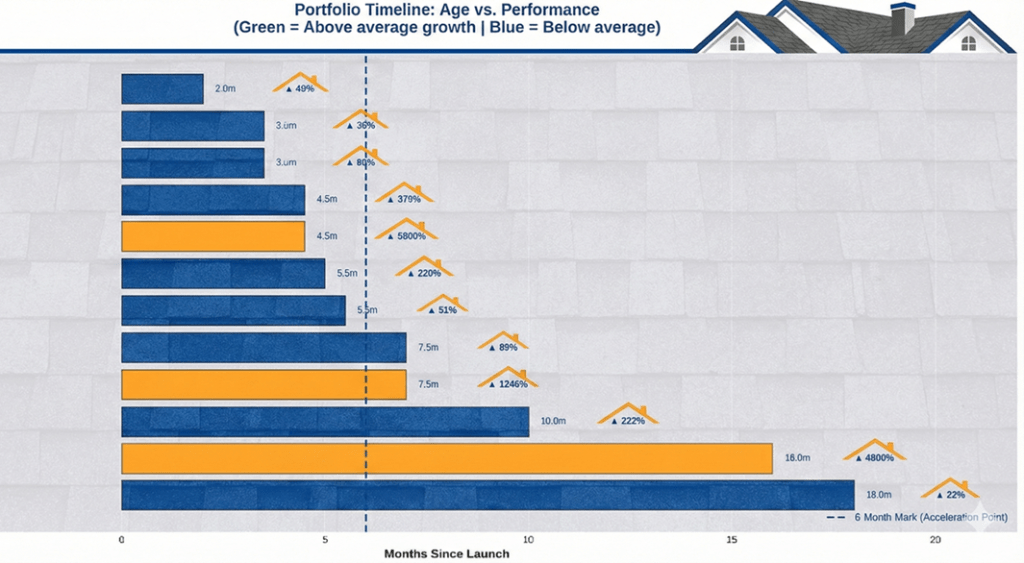
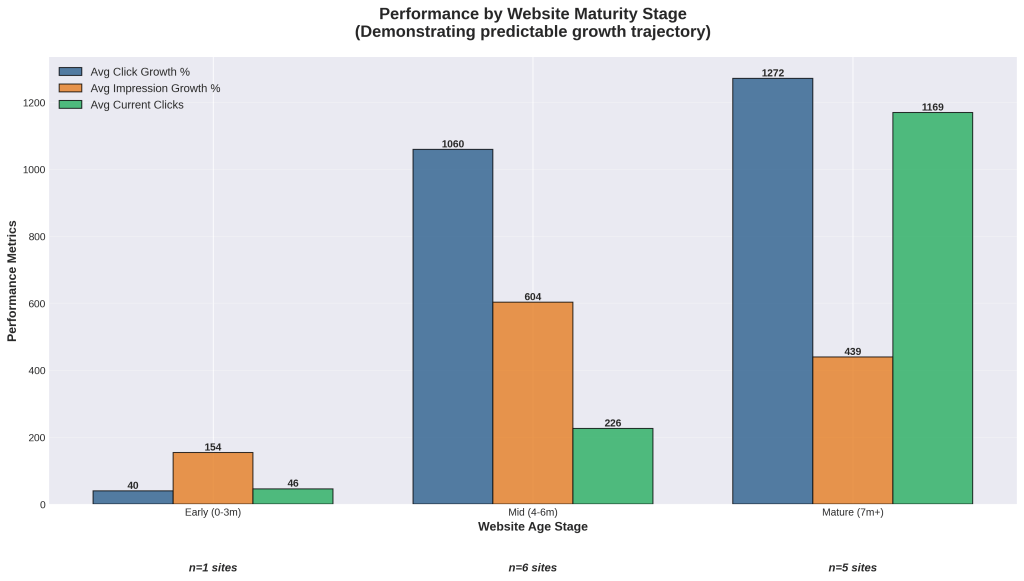
The 6-Month Acceleration Point
Sites consistently showed predictable growth phases. Average monthly clicks climbed from 46 in the first three months to 1,169 once a site passed month 7.
What this means
SEO is a compounding asset. The longer a properly built site is live, the better it performs. Sites at 18 months, like our New York roofer at 3,840 monthly clicks, show the long-term value of the investment.
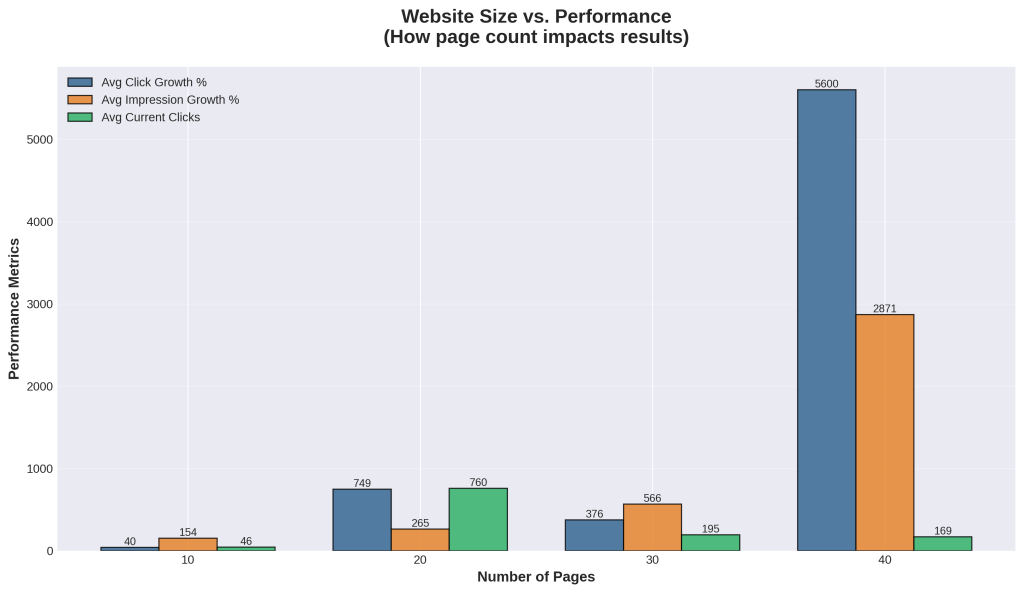
Page Count Impact
We analyzed performance by site size.
- Highest average click growth
- Strongest topical authority signals
- Most comprehensive service area coverage
- Still achieved 1,000%+ growth in many cases
- Good balance of breadth and depth
- Most common configuration in the portfolio
- Showed results but limited scale
- Best for very focused single-location contractors
Key insight: More pages is not just more content. It is more ranking opportunities. But quality matters: 20 well-built pages beat 50 thin pages every time.
Competition Level Does Not Determine Success
All 12 markets had mid-to-high level competition. Some sites launched in small towns with a population of 50,000. Others launched in metro areas with millions. The framework worked in both.
What actually matters
- Site architecture quality
- Local content depth
- Technical SEO
- Time (the compounding effect)
What matters less than you think
- Market size
- Number of competitors
- Backlink profile
- Domain age (if starting from scratch)
What We Actually Did: The Implementation
The Complete Hyper-Local Website Blueprint is a 7,000+ word guide with step-by-step detail on local website SEO. Read the Hyper-Local Website Blueprint. The four phases below give the high-level overview of our entire web development and local web SEO process.
Phase 1: Discovery & Strategy
Week 1Keyword research
We identified 100-200 high-value search terms for each market, including:
- Primary service keywords (such as "roof replacement" plus the city)
- Service area keywords (such as "roofer near" plus the neighborhood)
- Long-tail variations (such as "storm damage roof repair" plus the city)
- Semantic variations (what locals actually call things)
Competitive analysis
We analyzed the top 10 ranking sites in each market to find:
- Content gaps we could fill
- Technical weaknesses we could exploit
- Local SEO opportunities they missed
Topical mapping
We created a semantic content map showing:
- Main service silos
- Location page hierarchy
- Supporting content clusters
- Internal linking architecture
Phase 2: Website Design & Development
Weeks 2-4Custom WordPress design
Every site was built on WordPress with Elementor Pro, giving clients:
- Easy content editing
- Mobile-responsive design
- Fast page load times
- Custom graphics and branding
- Smart lead capture and conversion elements
Site architecture
Every website has a full roofing services silo plus a correctly designed multi-location service area silo. We built:
- 10-50 pages depending on package
- Service pages organized by type and material
- Location pages for every service area
- Supporting content (financing, warranties, about, contact)
Technical SEO
- Core Web Vitals tuning and image compression
- Mobile responsiveness
- Schema markup
- XML and HTML sitemaps
- Google Analytics and Search Console setup
Phase 3: Content Creation
Weeks 3-5Location page development
- Unique 800-1,500 word content
- Local landmarks and neighborhood mentions
- Service area maps
- Local testimonials and projects
- Click-to-call and form CTAs
Service page development
- Comprehensive service descriptions
- Before and after photo galleries
- Process explanations
- FAQ sections
On-page SEO
- Target keyword in the title tag
- Meta description writing
- Header tag hierarchy (H1, H2, H3)
- Internal linking strategy
- Alt text for all images
- Custom schema markup
Phase 4: Launch & Advanced Indexing
Week 5 onwardPre-launch checklist
- Technical SEO audit
- Mobile responsiveness testing
- Page speed verification
- Link validation
- Form testing
Post-launch advanced indexing and geo SEO
- KML file setup
- HTML meta geotagging (try the free HTML GeoTag Generator)
- LLMs.txt file setup (try the free LLMs.txt generator)
- XML sitemap submitted in Google Search Console
- HTML sitemap page linked in the footer
Client Investments and Timelines
These were not overnight successes. Each client invested in a comprehensive build.
What was included
- Custom WordPress website design
- Full on-page SEO
- Location page development
- Technical SEO implementation
- Google Analytics and Search Console setup
- One-time GBP audit
- Multiple design revision rounds
- Launch strategy calls
From Beta Builds to the Final Product
These 12 websites were our beta builds. They performed exceptionally well, and each one taught us something new.
- Delaware build40-page sites with comprehensive topical coverage drive exponential growth. More strategic pages means more ranking opportunities.
- Temple, TX buildNew domains can rank fast if the architecture is right from day one. Domain age matters less than structure quality.
- San Antonio buildMulti-service positioning sets a site apart. Being the only roofer who also does foundations gave them monopoly rankings.
- Virginia buildA service area business (SAB) with no physical address can rank across local search with the right location page architecture.
- New York build (18 months)The compounding effect is real. Sites at 12-18 months generate 5-10x the traffic of new sites.
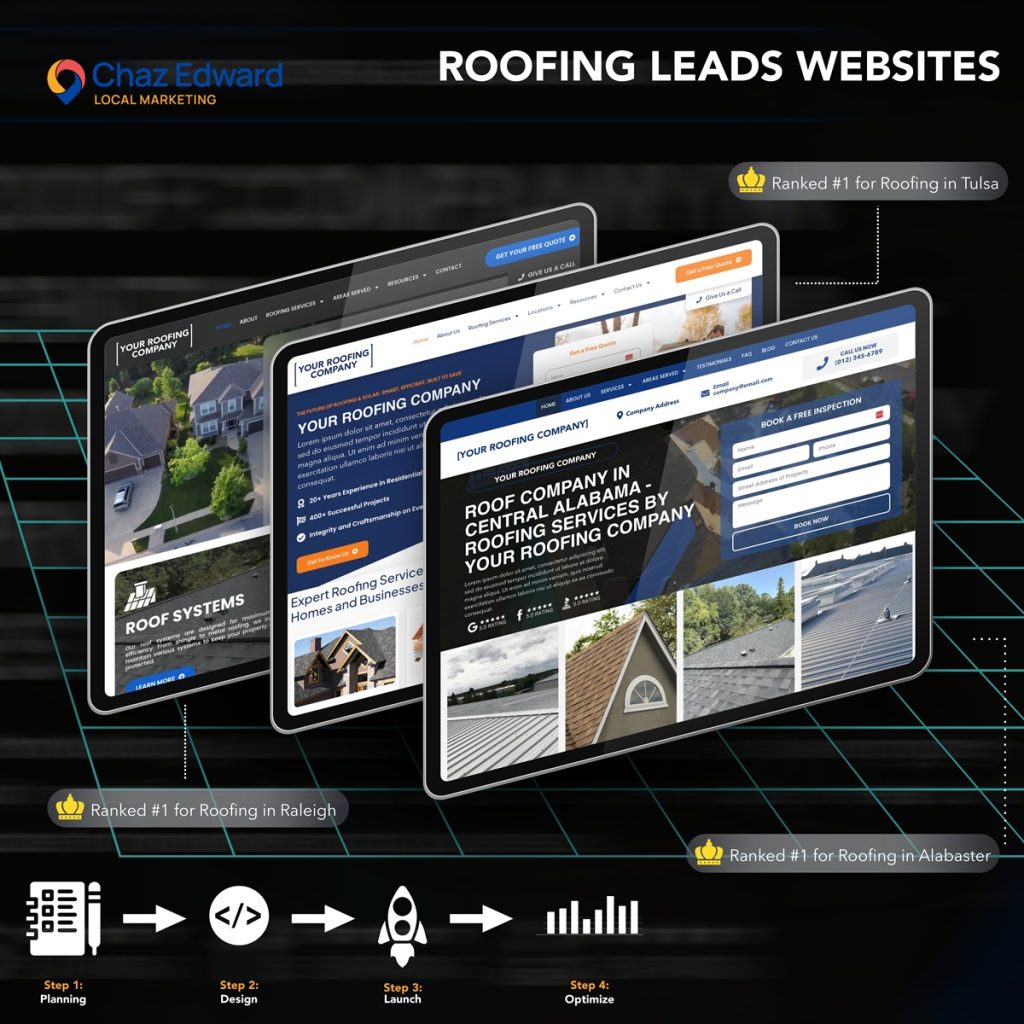
Introducing the Roofing Leads Website
We took every insight from these 12 builds and built the complete roofing website product. It includes everything from the beta sites, plus:
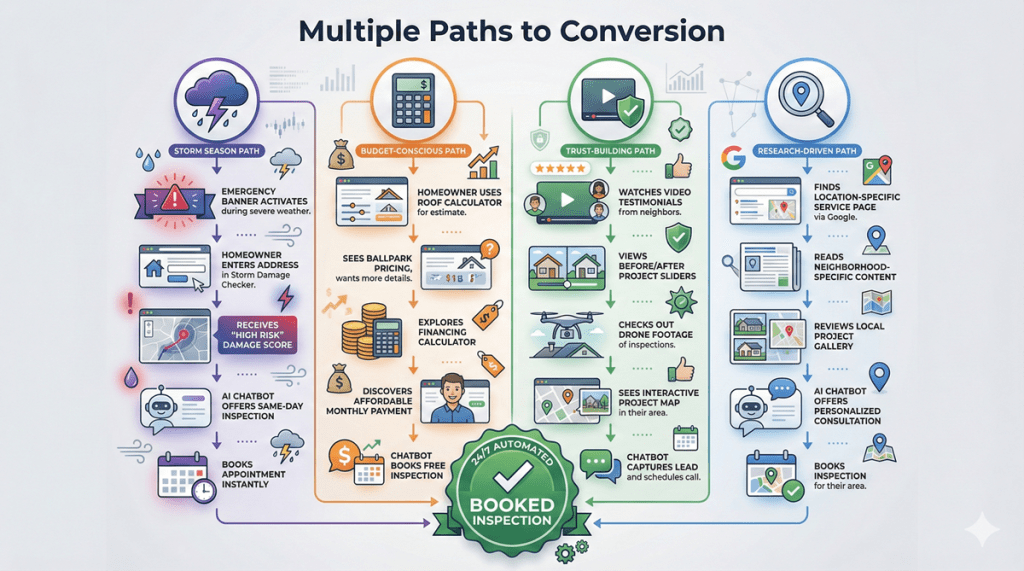
- Pre-installed AI chatbot for 24/7 inspection booking
- Storm Damage Checker widget (homeowners enter an address and storm dates and get an instant damage likelihood score)
- Instant Roof Quote widget (instant estimates that capture lead info)
- Financing Calculator (shows monthly payment options)
- Emergency Service Banner (weather-triggered "Storm Damage? Call Now")
- Interactive service area maps
- Google Maps Cloud Console integration
- Before and after sliders
- Video testimonial grids
- Drone footage integration framework
If these beta sites generated 1,063% average growth, imagine what the final product can do for your roofing business.
Learn more about the Roofing Leads WebsiteWant to see more builds? Browse the website design portfolio.
What This Means for Contractors and Agencies
For roofing contractors
If you are a roofing contractor reading this, here is what you need to know.
Your website can be your primary lead source
Paid ads are expensive. Door knocking is exhausting. Storm chasing is unpredictable. A roofing website built for local search generates leads 24/7, 365 days a year, without ongoing ad spend. Sites in this portfolio went from invisible to hundreds of clicks per month, which translates to dozens of qualified inspection requests.
Multi-location architecture is non-negotiable
If you serve 5 cities but only have content for your headquarters location, you leave 80% of your potential traffic on the table. You need dedicated pages for every service area, even where you have no physical office. This is the #1 factor separating high-performing roofing websites from mediocre ones. Our home services SEO work follows the same rule.
Results are predictable (if you build it right)
- 60-90 daysInitial rankings established
- 6 monthsAcceleration phase begins
- 12+ monthsMarket dominance achieved
This is not guesswork. It is a timeline backed by data from 12 different markets.
The investment pays for itself quickly
In this scenario, a $10,000 website that generates 150 clicks per month leads to 15 inspection requests and 5 closed jobs, or $40,000-$75,000 in revenue. The website pays for itself in the first month. Everything after that is return.
For marketing agencies
If you are an agency serving roofing contractors, this case study is your blueprint.
You have a proven, repeatable framework
These results were not luck. They came from a systematic methodology that works across markets. Replicate it for your roofing clients, or resell the whole build through our white label SEO for agencies program and put CELM's fulfillment behind your brand.
You can set accurate expectations
Show clients this data. Explain the 60-90 day timeline to initial results, the 6-month acceleration, and the long-term compounding effect. No more guessing.
You can justify premium pricing
When you can show 1,063% average growth across a portfolio, $5,000-$20,000 website builds become easy to sell. The return is clear.
This works in any roofing market
Small town or major metro. Residential or commercial. New construction or storm damage specialist. The framework adapts to any roofing niche.
Frequently Asked Questions
How long until I see results?
Based on this portfolio data: 60-90 days for initial ranking movement, 6 months for significant traffic growth, and 12+ months for market dominance. The compounding effect means longer is better.
Do I need a physical office in every location I want to rank for?
No. Location pages built with unique, local content let you rank in areas without physical offices, as multiple sites in this portfolio show. Google cares about genuine service area relevance, not office locations.
What if I'm in a really competitive market?
All 12 of these sites competed in mid-level or high-competition markets with established competitors. The framework works regardless of competition. It might just take slightly longer in ultra-competitive metros.
Can I update the website myself after launch?
Yes. All sites are built on WordPress with Elementor Pro, which gives you full editing control. We also provide training so your team can add projects, update content, and make changes without a developer.
What's the difference between a 20-page site and a 40-page site?
More pages means more ranking opportunities. The 40-page sites in this portfolio showed the highest growth because they covered more service areas and topics. But 20-page sites still achieved excellent results.
How much does a Roofing Leads Website cost?
Pricing depends on site size and service area coverage. View packages and pricing on the Roofing Leads Website product page.
The Website That Actually Books Inspections
Most roofing contractors treat their website as an afterthought: a digital brochure that looks nice but does little. This case study shows that is a missed opportunity.
A properly built roofing website is a 24/7 lead source. If you are a roofing contractor serious about growth, your website is where growth starts. Not your Google Business Profile. Not your paid ads. Not your door knocking or storm chasing. Build it right, and the leads come. Build it wrong, and you are invisible.
These 12 websites were our beta builds, and they performed exceptionally well. The final Roofing Leads Website takes everything we learned and adds AI chatbots, conversion widgets, storm damage checkers, and stronger lead capture tools.
What a roofing website built this way does
- Ranks in local search in every area you serve
- Ranks in neighborhoods where you do not have an office
- Appears in AI Overviews and ChatGPT answers when homeowners ask for roofer recommendations
- Captures leads automatically with conversion-focused tools
- Grows in value over time, getting stronger every month
average click growth
average impression growth
total monthly clicks
monthly impressions
Ready to Rank in Every Market You Serve?
Get a roofing website built on the framework behind these results.
- Rank in multiple locations and service areas
- Convert 2-3x more visitors with specialized roofing widgets
- Generate leads 24/7 with AI chatbot technology
- No contracts. No hidden fees. Just results.
Not ready yet? Start with a free local SEO audit.
Are You an Agency in Search of White Label Local SEO?
We execute our local search strategies done-for-you, with expert white label and enterprise fulfillment. Contact us and let's talk about delivering results for your clients.
