
ReTooling Our Local SEO Strategy Using Ranking Factor Leaks

How Google’s Ranking Factor Leaks Are Shaping the Future of Local Search
In 2025, local SEO isn’t just about ranking—it’s about dominating your market.
With insights from the 2024 Google Search Algorithm leak and testimony from the 2023 antitrust trial against Google, we’re adjusting our local SEO strategy to align with what really matters in search rankings.
These updates aren’t guesswork; they’re rooted in proven signals, data-backed insights, and a mission to help small businesses win. If you’re serious about growing your visibility and getting more local leads, this is your roadmap.
Brand Dominance is the New Cornerstone of Local SEO
— Brand Dominance is more traffic searching for your brand —
If your brand isn’t recognized, Google won’t prioritize you.
Google uses entities—your business name, website, and social accounts—to rank and filter results. The algorithm heavily favors brands that are searched for, engaged with, and trusted.
Google Ranks the Authority Brands
The 2024 Google API leak and related antitrust trial testimony strongly suggest that brand authority is becoming increasingly important for SEO.
Brand mentions, trust signals, and E-E-A-T principles are woven throughout the leaked data, indicating that Google’s algorithms prioritize brands that are seen as trustworthy and authoritative.
Whether through site quality raters, user engagement, or brand-specific searches, the evidence points toward a growing trend where trusted and authoritative brands are more likely to rank well, particularly when their content is seen as relevant, fresh, and highly trusted by users.
What We’re Updating in Our Local SEO Strategy
- Localized Brand Search Campaigns: Boosting searches for your brand with strategies like social media, referral traffic, and even local job postings to drive brand awareness.
- Social Media Integration: Consistent posting with strategic links back to your website to build recognition.
- Careers Page Setup: Missing one? We’ll create it. Not only does it attract local talent, but it also drives brand-specific searches.
- Custom Nested Schema w Entity IDs: Nothing explains your brand entity to Google better than structured data markup.
Watch: Chaz Discuss His Local SEO Updates for 2025
Optimizing for NavBoost and User Intent
The leaked documents highlight “NavBoost” as one of Google’s most influential ranking factors. Navboost was mentioned multiple times in the 2024 Google API leak, with over 80 references to it – seemingly a core part of Google’s search algorithm.
NavBoost analyzes how users interact with your brand, including direct navigation to your site, engagement levels, and how long they stay.
Chrome User Data as a Ranking Signal
The 2024 Google API leak also mentioned Chrome user data as a ranking signal, which raised some eyebrows in the SEO community. This reference points to the idea that Google utilizes data from its Chrome browser to help shape search rankings.
Since Chrome is one of the most widely used browsers globally, it provides Google with an extensive set of user data. This could include information about how users interact with websites, their browsing habits, page load times, time spent on pages, and more.
NavBoost & User Optimization in Local SEO
- Internal Linking: Creating a web of links to keep users exploring your site longer.
- Embedded Media: Adding videos, FAQs, and interactive tools to engage visitors.
- External Links in New Tabs: Keeping users on your site even when they explore external resources.
- CTA and Conversion Completions: Turning website visitors into converted leads, and feeding Google completed search signals.

What the 2024 Google API Leak Reveals About On-Page SEO
The 2024 Google API leak has provided a treasure trove of information for SEOs looking to stay ahead of the curve. Among the most significant revelations were insights into how on-page SEO factors are evaluated by Google’s algorithms. From content freshness to mobile optimization, the leak sheds light on various ranking factors that are essential for improving your website’s visibility in search results.
Search Query Optimization: Page Titles That Match
Google’s ranking system rewards page titles that precisely match search intent.
A weak title? Your page doesn’t stand a chance.
Content Structure and Readability
Content organization has also come to the forefront in Google’s ranking considerations. The leak reinforces the importance of content hierarchy through the use of header tags (H1, H2, H3) and proper formatting. Google uses these headers to understand the structure of your content and how it’s organized, making it easier for both users and search engines to navigate.
Multimedia Optimization
With the leak revealing increased emphasis on user interaction, multimedia content like images, videos, and infographics are becoming more important. Google now looks at how well multimedia content is optimized to enhance user engagement and SEO.
Internal and External Linking
Linking remains a vital part of SEO, with the leak highlighting the importance of both internal linking and external backlinks. Google uses internal links to measure site authority and relevance. External links, especially from high-authority domains, continue to carry significant weight in ranking factors.
Structured Data and Schema Markup
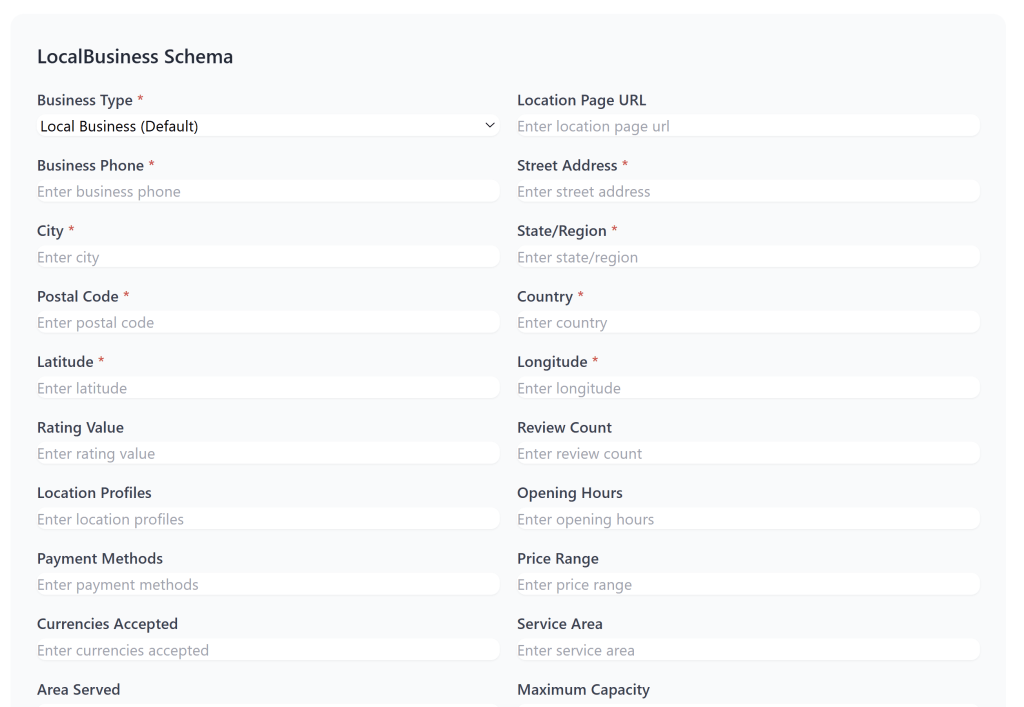
- Structured Data for Rich Results: Implementing structured data (e.g., Schema.org markup) is a clear takeaway from the leaks. Google now uses schema markup to understand page content and provide rich snippets. Websites using structured data are more likely to earn rich results like star ratings, event information, FAQs, and more.
- On-Page Structured Data: Adding schema markup for local businesses, product pages, articles, or reviews can help Google better understand your content and make it more likely to show up in enhanced search results.
Updated On-Page SEO Optimization
- Titles are written with a query-first format, aligning closely with what users type into Google.
- Keyword-rich titles that attract both users and search engines.
- Manual tuning HTags based on top-ranking pages
- Every page we create is a rich-media experience, from charts and graphs, to embedded videos, maps and custom widgets, we ensure your local website stands out in multimedia optimization.
- Advanced internal and external linking to create relevance and trust.
- Custom nested schema and entity id fragments
Fresh Content Matters: Stay Relevant
The freshness factor mentioned in the 2024 Google API leak refers to the idea that Google’s search algorithms prioritize content that is new or regularly updated.
In simple terms, it indicates that fresh, up-to-date information can have a more significant impact on search rankings.
This factor was highlighted in the leaked documentation, but specifics about its exact implementation remain somewhat vague.
However, there are a few key takeaways:
1. Content Updates Matter
Google likely values content that is regularly refreshed, indicating that pages with the latest information are seen as more relevant and authoritative.
This aligns with the common understanding that Google wants to provide users with the most timely and accurate answers, especially in fast-moving industries like technology, news, and health.
2. Real-Time Events
For certain queries, especially news-related searches and events, content freshness may be even more crucial.
For example, real-time events or breaking news stories can significantly impact how pages are ranked, with newly published articles or updates getting more priority than older ones.
3. Frequency of Updates
The leak suggests that Google may not just look at the publication date of a page but also at how frequently a page is updated.
Regularly updated content on websites like blogs or news sites can signal to Google that the page remains relevant over time.
4. User Behavior and Freshness
There’s also speculation that user engagement metrics such as how often users click on fresh content may influence rankings.
If users regularly engage with recently published content, it may signal its importance and relevance, pushing it higher in search results.
5. Freshness vs. Timeless Content
While freshness is important, it’s not the sole factor. For many topics, especially those related to evergreen content, Google still values authority and content depth.
Freshness factors likely have a greater influence on time-sensitive queries but less so on topics where lasting authority and comprehensive coverage are more crucial.
The freshness factor from the leaks indicates that keeping content updated is crucial for maintaining competitive rankings, especially in dynamic fields.
Websites that focus on continually refreshing their pages with the latest data, trends, and news will likely be rewarded in search rankings for certain types of queries.
Google loves fresh, timely content. Stale content gets pushed aside for sites that stay current.
‘Fresh’ Local Content Strategy for More SERP Coverage
Local Event Promotion: Creating event pages and using schema to boost visibility.
Timely Content Creation: Blogs about local news and trends.
Regular Content Updates: Keeping existing pages relevant with new information.
Building Authorship and Strengthening E-E-A-T
The 2024 Google API leak does not directly mention “authorship” as a specific ranking factor, but it strongly alludes to the importance of E-E-A-T (Experience, Expertise, Authoritativeness, and Trustworthiness), which includes the concept of authorship.
The idea is that content created by experts or authoritative figures is more likely to rank higher, especially in fields that require a high level of trust, like health, finance, or legal topics.
Inference on Authorship
Google wants to know who’s behind the content. Authorship helps establish credibility.
Expertise and Authoritativeness: The leak highlights that Google’s algorithms are increasingly focusing on authority, which likely refers to the author’s expertise in the subject matter. Websites that feature content from credible authors or have author bios that establish expertise are more likely to be considered authoritative.
- Authoritative Authors: In high-stakes sectors (like medical, legal, and financial fields), content written by well-known experts is more likely to be deemed valuable by Google. This suggests that authorship plays a role in Google’s evaluation of content quality, even if it’s not explicitly mentioned as a ranking factor.
Trustworthiness: Trust is another aspect of E-E-A-T, and part of how trust is built is by showcasing the credentials of authors. Articles from authors with clear expertise or verified credentials (e.g., doctors, certified financial advisors) may rank higher because they provide an additional layer of trustworthiness to the content.
Authorship in Relation to Brand Authority:
- Brand Recognition: The leaks suggest that brand authority is essential, and often, a strong brand is tied to reputable authorship. For example, content from a well-known brand or a well-regarded author in a specific field is seen as more reliable and valuable to users. Google’s algorithms may use these signals to evaluate the overall authority of a piece of content.
Our Authorship (E-E-A-T) Enhancements
- Gravatar Setup: Ensures your author profile appears across platforms and acts as a brand hub for your most important online profiles.
- Author Info Box: Adds author details to every blog post.
- LinkedIn Article Publishing: Well-researched and cited articles designed to showcase experience and expertise. Articles with bylines, linking back to your author profile.

Reviews and Third-Party Validation
The 2024 Google API leak and related discussions strongly emphasize the importance of trust signals as part of the broader E-E-A-T (Experience, Expertise, Authoritativeness, and Trustworthiness) framework. Several key inferences can be made based on the details of the leak, pointing to trust signals as an integral part of Google’s ranking algorithm.
Here’s what the leaks suggest about trust signals:
Brand Authority as a Trust Signal
- The leak underscores the role of brand authority in search rankings, indicating that trusted and established brands are more likely to rank higher. Brands that are recognized and mentioned positively across the web send strong signals of trustworthiness to Google.
- Trust signals from well-known brands, such as positive reviews, mentions in reputable publications, or backlinks from credible sources, directly influence rankings.
Positive Reviews and Social Proof
- User-generated trust signals, such as positive online reviews, are heavily emphasized. A site with a history of positive reviews across multiple platforms (Google Reviews, Yelp, industry-specific review sites) sends signals of trust to Google.
- The leak also alluded to how social proof, such as mentions and recommendations on social media, can contribute to the trustworthiness of a brand and its content.
External Mentions and Backlinks
- Mentions in reputable publications and backlinks from trusted domains are strong indicators of a site’s trustworthiness. Google likely views links from authoritative sources (e.g., high-quality news sites, scholarly articles, and other well-established websites) as trust signals.
- Trust signals in the form of backlinks from authoritative sites reinforce the idea that the site or content being linked to is credible.
Clear Contact Information and Transparency
- Transparent business information, including a clear NAP (Name, Address, Phone Number) section and accessible contact details, helps improve trust. The leak suggests that Google evaluates how well a site provides clear and visible business information as a trust signal, particularly for local businesses.
User-Generated Content and Trust Signals
- The leak hinted at how user-generated content like comments, ratings, and reviews can serve as trust signals. These elements help Google gauge the authenticity of the site’s content and the trustworthiness of the brand.
Local Trust Signals
- For local SEO, the trustworthiness of a business is increasingly influenced by local brand mentions, local reviews, and local directories. These help Google verify the legitimacy of a business’s presence in a particular location, which is crucial for local ranking factors.
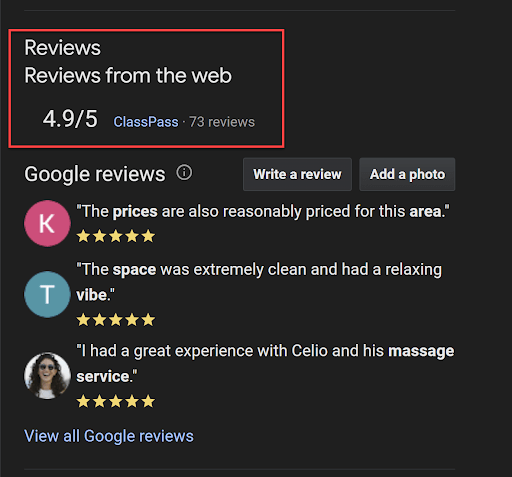
Reviews matter—on Google and beyond.
They’re not just for customers; they’re ranking signals.
How We’re Strengthening Trust
- Third-Party Reviews: Strategies to gain reviews on TrustPilot, Angi, and other platforms.
- Google Review Generation Strategy: Generating steady, authentic reviews to boost local prominence.
Consistency and Variety in Signals
The 2024 Google API leak provides several insights into signal building as a crucial factor in Google’s ranking algorithm.
Signal building refers to the process of establishing authority and trustworthiness through various signals, which can come from a wide range of activities like content creation, user engagement, backlinks, and more.
While the leak doesn’t offer a step-by-step guide on how to build signals, it strongly suggests that diverse signals contribute to higher search rankings, and local SEO is no exception.
Brand Authority Signals
- The leak underscores the importance of brand authority in SEO. Brands that are well-known and recognized are likely to rank higher, and Google uses brand-related signals to evaluate a site’s trustworthiness.
Google rewards consistency in your business’s online footprint.
Sporadic signals? They look suspicious. Too repetitive?
You’re filtered out.
Our Signal Strategy
- Steady Signal Building: Regular link and citation creation over time.
- Brand First: We establish the brand and then continue to amplify it throughout the campaign.
- Variety of Signals: Wider use of different link types and sources.
- Geo Signals: Adding mentions of your business from local organizations, directories, and events.
- KML File Optimization: Enhances Google Maps relevance.

| When to Execute | Campaign Optimization Tasks |
|---|---|
|
Set-Up |
Topical Map/Web Silo |
|
Set-Up |
Brand Profile Optimization |
|
Set-Up |
Competitor Analysis |
|
Set-Up |
Keyword Research |
Why It Matters
Google is constantly evolving, and staying ahead means adapting to these changes. At Chaz Edward Local Marketing, our mission is simple: to win for our clients. Whether you’re a small business owner or an SEO looking for expertise, these updates are designed to give you the edge in a competitive market.
Let’s Talk About Your Local Marketing
Contact us today and see how Chaz Edward Local Marketing can help you achieve your goals with proven SEO strategies tailored to your needs!
Give your brand a boost today!
Bringing Your Brand Home, One Click at a Time Using Data-Driven Digital Marketing Solutions Designed to Maximize New Customers and Revenue
Request a Free Digital Marketing Audit and Custom Strategy
Please allow up to 5 business days for the completion of your audit and custom strategy

Enter your information to receive a free Digital Marketing Audit and Customized Growth Strategy.